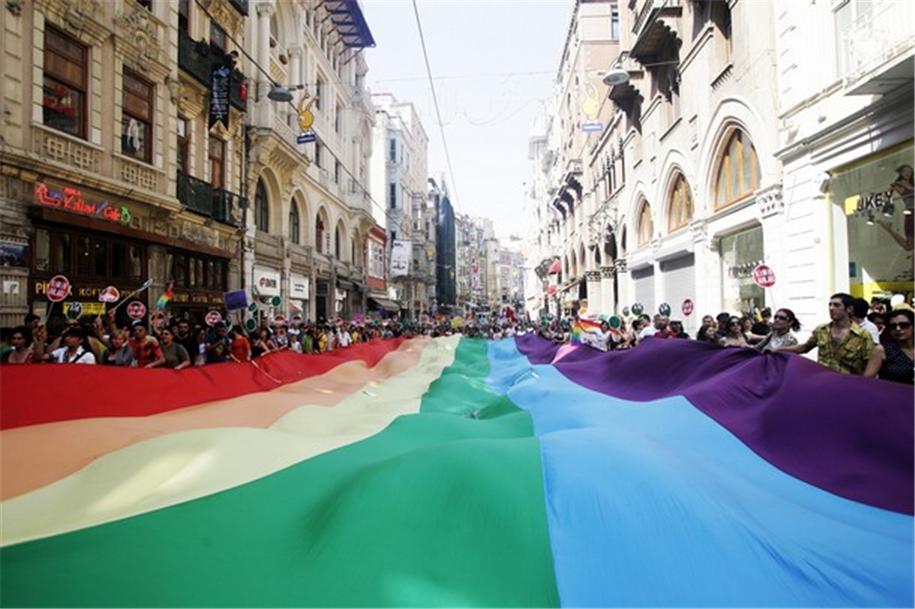
Queer and feminist visual activism has various origins across the globe and has emerged in a fluid cultural field of visual arts, popular culture, and protest aesthetics. In a new special issue of the Journal of Cultural Analysis and Social Change, co-edited with Dr Tessa Lewin, we explore global queer and feminist social justice activist opportunities and expressions across images and their context of production, mediation and re-mediation, as well as both the aesthetics and performativity of visual activism. The history of global feminist and queer activism has often been dominated by Western perspectives. This special issue seeks to foreground activism from across the globe, reflecting how international perspectives and agendas are increasingly central to contemporary queer and feminist activism. Across eleven comissioned articles we engage with the richness of activist aesthetics at the intersections of popular culture, subculture, art and activism, and other forms of visual political communication, by opening up cross- and inter-disciplinary perspectives, and conversations across diverse global contexts, struggles and possibilities, with the aim to expand on existing scholarship both geographically and conceptually. A central motivation for this work has been to think beyond the image; to be able to capture and engage with the activist communities (and the activism) behind and alongside the image and produced through the image. Taking the notion of social practice as an integral part of the ‘process’ of visual activism, we identify three emerging themes across the articles in this special issue: refusal, care and thriving.
“A central motivation for this special issue has been to think beyond the image; to be able to capture and engage with the activist communities (and the activism) behind and alongside the image and produced through the image.”
In our introduction we outline how visual communication is intertwined with sexual and gender rights movements from its early days, and how both subcultural and popular cultural visual repertoires have emerged in tandem with feminist and queer political work for sexual liberation. The epistemology of LGBTQ liberation is arguably as entwined with ‘visibility’ as with ‘pride’ and the state of being visible, being ‘out’ remains a major (albeit fraught) trope in queer culture and activism. To help navigate the field, we conceive of three primary forms of queer and feminist visual practice – protest, process and product – each with its own histories and epistemologies. We argue that researching queer and feminist visual activism, not least because of its many different contexts and modalities, requires an interdisciplinary approach that draws on both arts, cultural studies and social sciences methodologies and epistemologies, and that incorporates a decolonial lens and decolonial research methods.
 Olu Jenzen